
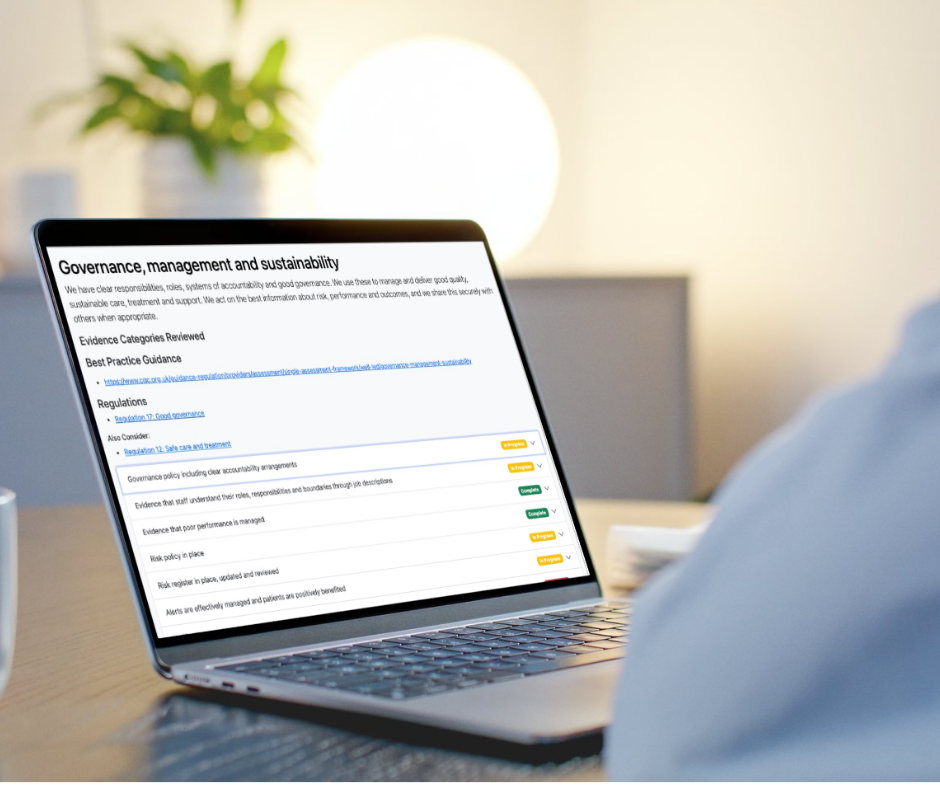

In an ever-evolving regulatory landscape, healthcare providers must not only understand the Care Quality Commission’s (CQC) expectations but demonstrate how these are met in everyday practice. The CQC’s Assessment Framework places Quality Statements at the heart of its approach; clear, outcome-based expectations that define “what good looks like” for patients, staff, and service delivery.
Whether you’re running a GP practice, an independent clinic, or a multi-site healthcare organisation, understanding how to evidence compliance across all Quality Statements is essential.
Understanding the CQC’s Quality Statements
The CQC’s Quality Statements replace the former Key Lines of Enquiry (KLOEs), offering a more streamlined, person-centred approach to assessing quality. Each statement sits under one of the five Key Questions:
- Safe – Are people protected from avoidable harm?
- Effective – Does care achieve good outcomes and promote quality of life?
- Caring – Do staff involve and treat people with compassion, kindness, dignity, and respect?
- Responsive – Are services organised to meet people’s needs?
- Well-led – Is leadership effective in creating a culture of safety, learning, and improvement?
Each statement outlines what “good” looks like in practice—providing a benchmark for continuous improvement and regulatory assurance.
How to Demonstrate “What Good Looks Like”
Meeting the CQC’s expectations isn’t about paperwork—it’s about embedding a culture of quality and governance. Providers should be able to show how their systems, processes, and people work together to deliver safe and effective care.
Key areas of focus include:
1. Governance and Oversight:
Strong governance structures ensure risks are identified early, learning is shared, and improvement is continuous. Evidence might include regular audits, board minutes, or a Regulation 17 governance framework.
2. Patient Experience and Feedback:
Actively seeking and responding to patient feedback shows a commitment to quality improvement. Demonstrate how complaints, compliments, and surveys lead to tangible change.
3. Workforce Competence and Culture:
CQC looks for evidence of training, supervision, and staff engagement. Providers that nurture a positive, open culture are consistently rated higher.
4. Safety and Risk Management:
Risk assessments, incident reviews, and safeguarding processes should show how patient safety is prioritised and learning is embedded across the team.
5. Quality Improvement and Innovation:
The best providers go beyond compliance; they innovate. Showcase examples of service redesign, digital solutions, or partnership working that improve outcomes and access.
Continuous Compliance, Not One-Off Preparation
The CQC’s approach is increasingly data-driven, meaning that evidence of good practice must be visible all year round, not just when an inspection is due. “Good” organisations embed quality monitoring into daily operations, using digital tools, regular reviews, and governance dashboards to stay inspection ready.
Platforms like our CQC Compliance software are designed to help providers self-assess, track evidence, and stay aligned with the CQC’s Quality Statements all in one secure place.
“What good looks like” isn’t a mystery—it’s measurable, visible, and achievable with the right systems and support. Whether you’re new to registration or striving for an Outstanding rating, BAXCQC can help you understand, evidence, and sustain CQC compliance across all Quality Statements.
Ready to find out how your service measures up? Contact us today for a free discovery call.